
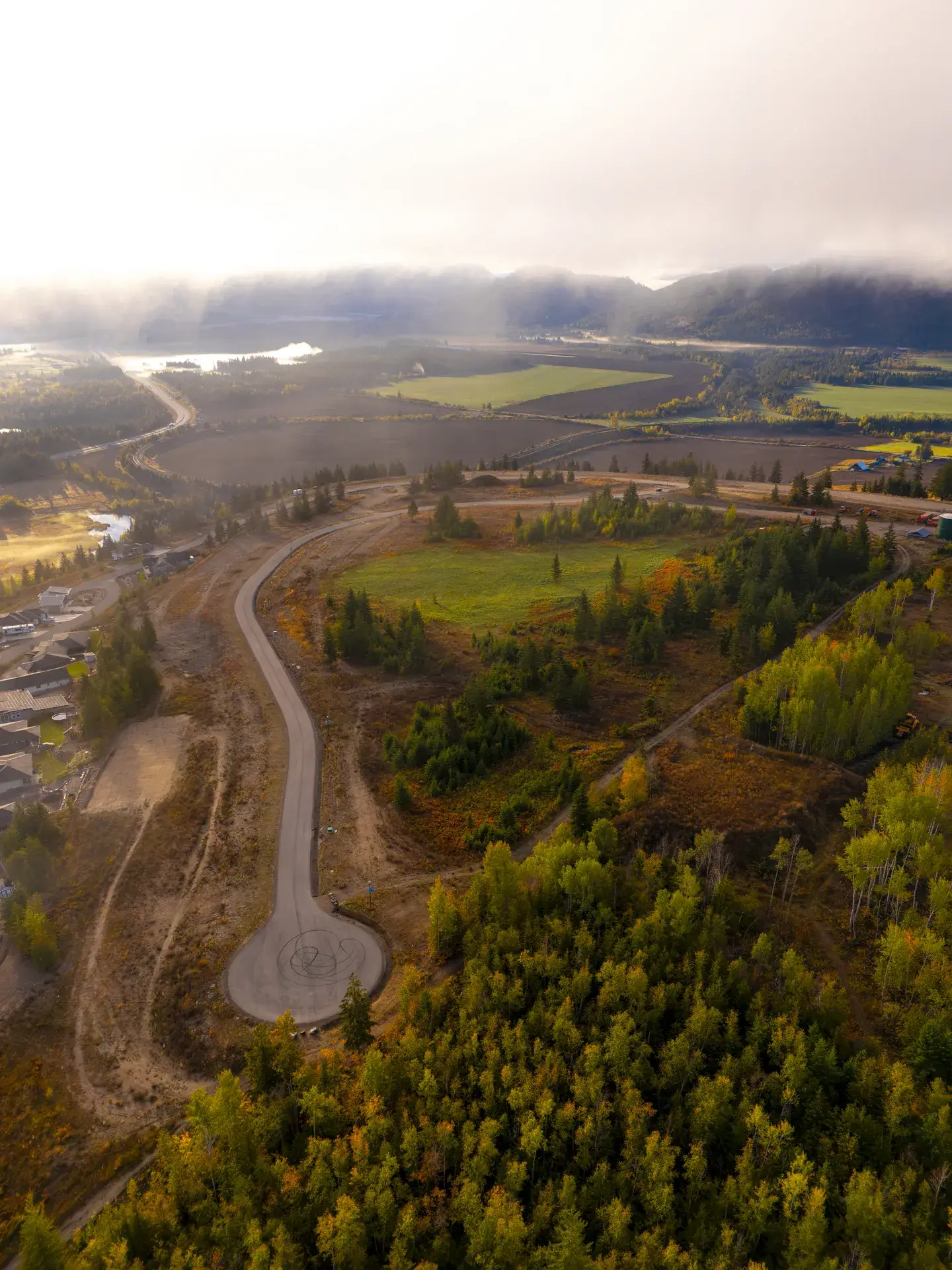
Financing Guide · 2026
How a BC construction mortgage works when you buy the lot first
A construction mortgage is a loan that refuses to give you the money until you’ve already spent it.
In BC, a construction mortgage is usually two loans wearing one name. One buys the lot. The other pays your builder in stages as the house goes up, interest-only until it's done. Own the lot outright already? It can stand in for part of your down payment.
By Justin Gaspari, REALTOR®, CIR Realty · Updated November 2026
Get the lot price list
Start with real lot pricing. Tell us what you’re after and Justin will send the current price list and lot map.
Justin Gaspari, REALTOR®, CIR Realty
Sales Centre: 2412 Highlands Drive, Fri to Sun, 11 am to 2 pm
Every lot’s price is published at /lots-for-sale/, not withheld.
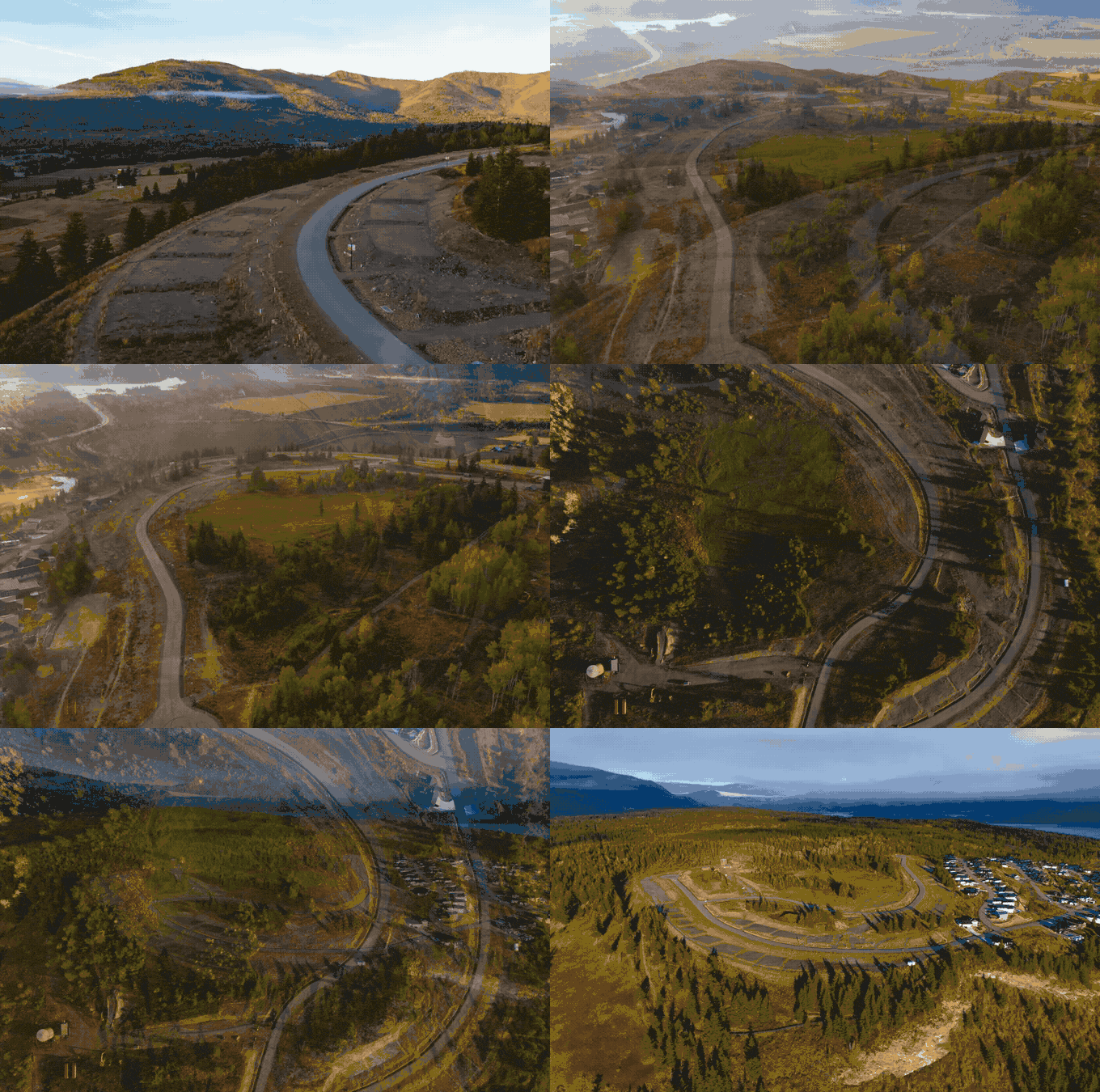
Construction loan BC vs. vacant land mortgage BC: the two loans people confuse
Most first-time builders assume a "construction mortgage" covers the lot too. It doesn't, not directly. A land or lot loan buys the vacant lot itself, usually in one lump sum at closing. A construction mortgage (also called a progress-draw mortgage) pays for building the house once you own that lot, or are far enough into buying it. Different stages, different loans. Most lenders treat them as two separate decisions, not one.
| Land / lot loan | Construction (progress-draw) mortgage | |
|---|---|---|
| What it buys | The vacant lot itself | Building the house, once you own or are buying the lot |
| CMHC insurance | CMHC states loan advances on vacant land are not permitted | Can be insured as a progress-advance mortgage, up to 95% loan-to-value for an owner-occupied 1-2 unit house, 90% for 3-4 units |
| How it pays out | Usually a lump sum at closing | Released in stages, checked by inspection, not all at once |
| Payments while building | Regular payments, like any loan | Interest-only on the amount drawn so far, paid monthly during construction |
Still deciding whether to buy a lot and build, or just buy a finished house? Our buying land vs buying a house guide covers that trade-off on its own, separate from the mortgage mechanics here.
How construction mortgage draws work: the progress draw mortgage schedule
A construction mortgage doesn't hand you the full amount up front. It releases money in stages, called draws, tied to how far the house has actually gotten. RBC publishes a 5-draw example on its own site, and it's a handy map even if your lender's split looks a little different:
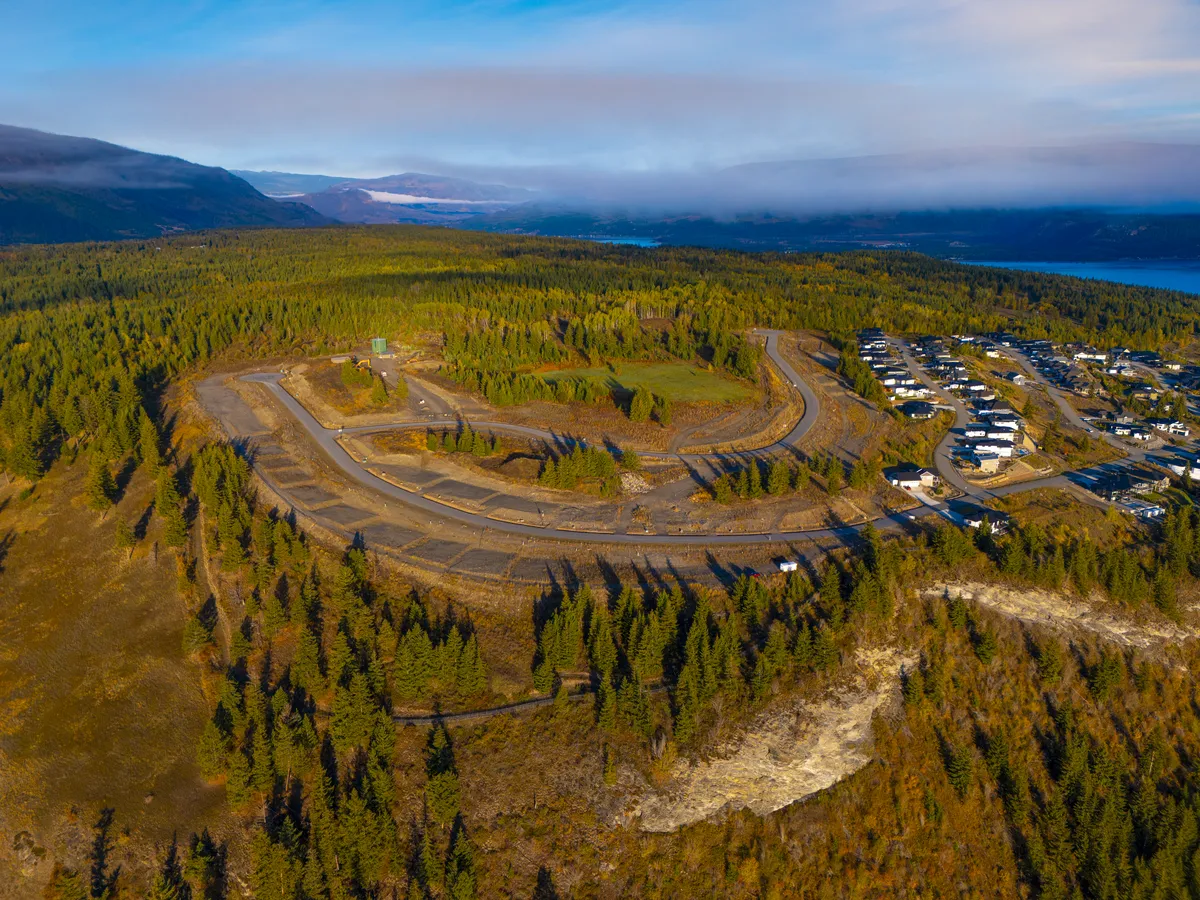
| Draw | What triggers it |
|---|---|
| Draw 1 | Up to 65% of the appraised value of the lot, the maximum the bank will release at this stage |
| Draw 2 | Foundation and backfill inspection |
| Draw 3 | Framing, roof, doors and windows in place |
| Draw 4 | Electrical, plumbing, insulation and exterior complete |
| Draw 5 | House 100% complete |
RBC's own worked example uses a $100,000 lot, a $300,000 construction cost, and a 20% down payment of $80,000. The page is clear that you pay interest only on the outstanding balance, every month, through construction. Treat that 20% as RBC's own illustration, not a minimum every lender demands. And if $300,000 sounds low for this market, check our cost to build a house on the Shuswap guide for real, local numbers to compare it against.
Construction mortgage down payment BC: what a paid-off lot is worth
CMHC's own program page shows just how far a construction mortgage can stretch. A progress-advance mortgage on an owner-occupied house of one or two units can be insured up to 95% loan-to-value, 90% for three or four units. That's a wide window. But there's a catch most first-time builders don't see coming.
CMHC says it plainly: loan advances on vacant land are not permitted. You need to already hold title to the land by the time of the first advance (if you're owner-building or hiring a builder directly), or have a signed agreement of purchase and sale in place (if a homebuilder is pre-selling you a finished house) before construction even starts. In practice, that means the lot gets bought first, with cash or a separate land loan, and the construction mortgage only starts drawing once you own it outright or are far enough into that purchase. A paid-off lot then works like equity already sitting in the deal, not cash you still owe on top of the build.
Before you lock in a down payment number, run your own lot price and build cost through our GST + PTT calculator. That way you know what you're actually putting down against, not just what the mortgage covers.
Why a fully serviced lot matters for a builders mortgage in BC
What's already sitting at the lot line seems to move the numbers lenders are willing to quote. On r/homebuildingcanada, one buyer described a land draw of 75% of their lot's value because the property sat on municipal services, versus 65% if it had been on well and septic. That's one commenter's own experience, not a published lender policy. But it matches what we hear often from Highlands buyers: a fully serviced lot gives a lender less to worry about and fewer unknowns to price in.
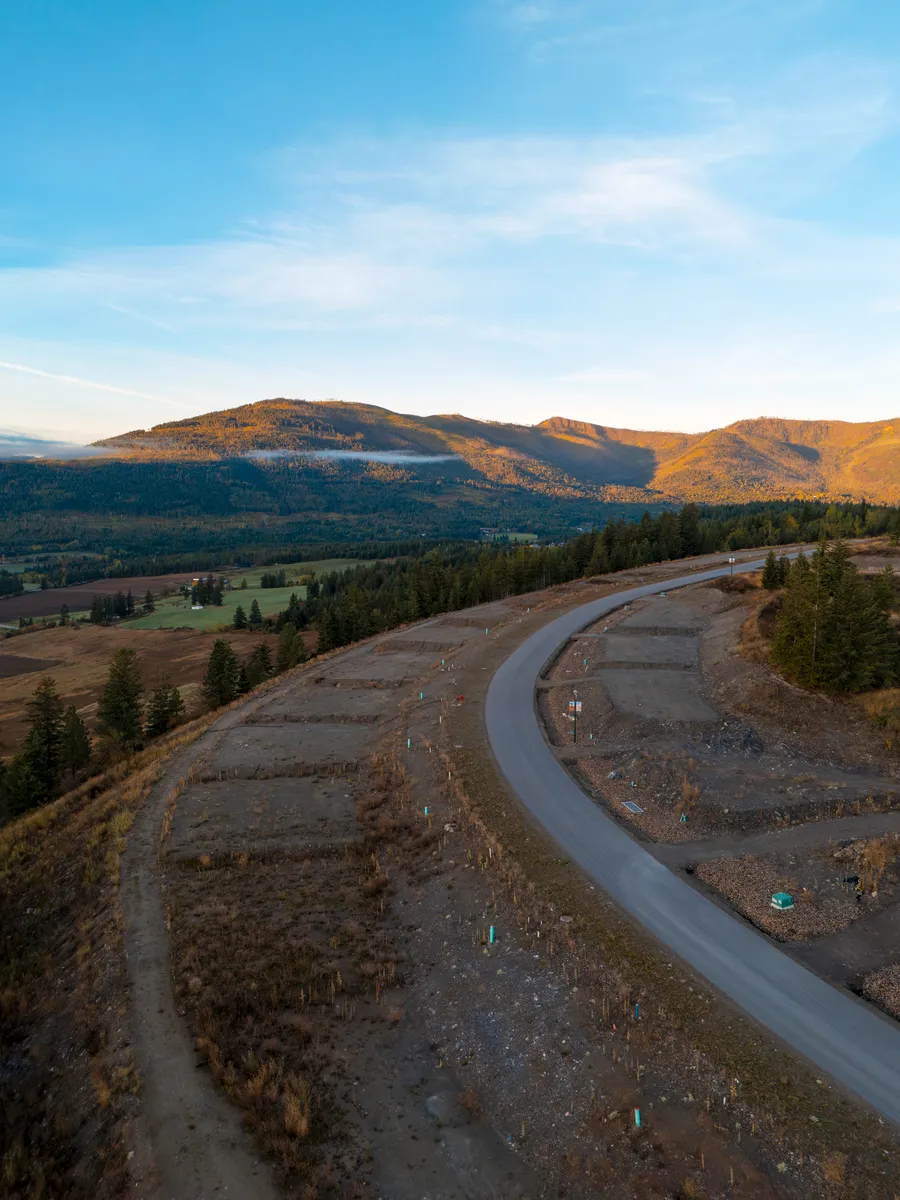
Every lot at The Highlands already has road, power and water at the lot line. No well, septic field or hydro extension to budget or finance on your own. Take a look at every lot and price in the current release and compare it against a build-your-own lot elsewhere. If you're weighing a construction mortgage here specifically, a mortgage agent who already knows the area can save you a lot of back-and-forth: Pete Diamantakos, a licensed mortgage agent (M24001964) with Tango Financial, works with Highlands buyers on this kind of financing.
What to bring your lender for a self build mortgage in Canada
Every lender wants slightly different paperwork, but a self build mortgage in Canada almost always comes down to the same stack of documents. Have these ready before your first meeting:
- Proof you own the lot, or a signed purchase agreement for it. CMHC requires title in hand, or that agreement, by the time of the first advance.
- An appraisal of the lot. The first draw is sized against its appraised value, not what you paid for it.
- A full construction contract and cost breakdown from your builder, split into the same stages your draws will follow.
- Your down payment, whether that's cash or the equity in a lot you already own outright.
- The usual income, employment and credit documents any mortgage application needs.
- Proof of new home warranty coverage, or confirmation you qualify for an owner-builder exemption. CMHC requires one or the other on an insured progress-advance mortgage.
Our steps to build a house in BC guide walks through where this paperwork actually falls in the real order of a build, not just the lending order.
What Reddit says about construction mortgage rates in BC
We read through BC's construction-mortgage threads so you don't have to. Take these for what they are: individual buyers describing their own deals, not a published rate sheet from any lender.
"Own property outright value of $350,000. Were able to withdraw 60% of that value to start the foundation... we've taken just about 18 months." And on the same build: "Land draw was based on 75% of land value because we're on municipal services. Would have been 65% if on well and septic."
Source: r/homebuildingcanada, "Self build construction mortgage using outright owned land as down payment?", Oct 27 2026
"You'll have the best luck with local credit unions in the town where the lot is... With 60% down and an 840 score."
Source: r/PersonalFinanceCanada, "Need a land loan in BC", Sep 25 2025
"Credit unions are usually the best, have lenient rental offsets, more draws etc."
Source: r/MortgagesCanada, "Best Construction Mortgage Lender?", Apr 26 2026
| Claim | Reported by | Note |
|---|---|---|
| 60% of a paid-off lot's value released to start the foundation | r/homebuildingcanada | On a $350,000 lot, with the build taking about 18 months |
| 75% land draw on municipal services vs. 65% on well and septic | r/homebuildingcanada | Same buyer; the serviced lot drew a higher percentage |
| 60% down payment with an 840 credit score | r/PersonalFinanceCanada | Shopping a land loan specifically, not a full construction mortgage |
These are commenters' own numbers, not a lender's rate sheet, and nobody's score or lender is being named officially here. Confirm anything that matters with your own lender before you plan around it. For what it's worth, a $350,000 lot is well above anything at The Highlands, where every lot is already serviced and priced plainly, right on our site.
Common questions
Construction mortgage questions buyers ask
How does a construction mortgage work?
A construction mortgage pays your builder in installments called draws, instead of handing over the full loan amount at once. RBC's own published example uses 5 draws, starting at up to 65% of the appraised lot value and ending at 100% complete. You pay interest only on the amount actually drawn each month, not the full approved loan, until the house is finished. At that point the mortgage typically converts to a regular one.
What are construction mortgage draws?
Draws are the staged payments a lender releases as a house gets built, checked against inspections instead of paid out upfront in one lump sum. RBC's published 5-draw example runs: up to 65% of the lot's appraised value, then foundation and backfill, framing with roof, doors and windows, electrical and plumbing with insulation and exterior, and finally 100% complete. Each stage usually needs its own inspection before the next draw gets released.
How much is a construction mortgage down payment?
There's no single number every lender requires. RBC's worked example uses a 20% down payment ($80,000 on a $100,000 lot plus a $300,000 build), but the page presents that as an illustration, not a stated minimum. CMHC will insure an owner-occupied 1-2 unit progress-advance mortgage up to 95% loan-to-value, and a lot you already own outright can count toward that instead of cash.
What is the difference between a construction loan and a mortgage?
A construction loan, or construction mortgage, pays out in stages while the house is being built, with interest-only payments on whatever's been drawn so far. A regular mortgage pays out once, against a finished house, with full principal-and-interest payments from day one. Most construction mortgages convert into a standard mortgage once the house reaches 100% complete and the final draw goes out.
Does CMHC insure a construction mortgage in BC?
Yes, under what CMHC calls its Improvement program. A progress-advance mortgage on an owner-occupied house of 1 or 2 units can be insured up to 95% loan-to-value, 90% for a 3 or 4 unit property. What CMHC won't insure is the vacant land itself. Its own page states loan advances on vacant land are not permitted, which is why the lot is almost always bought separately, first.
Can a paid-off lot be used as a construction mortgage down payment?
In practice, yes. CMHC requires you to already hold title to the land, or have a signed purchase agreement, by the time of the first draw. So a lot you own outright effectively stands in as equity, not cash you still owe. One Reddit commenter described withdrawing 60% of a $350,000 paid-off lot's value to start the foundation. Treat that as one buyer's own experience, not a fixed lender formula.
Sources
- RBC, Building Your Own House (construction mortgage draw schedule and worked example) www.rbcroyalbank.com/mortgages/building-your-own-house.html
- CMHC, Improvement program (progress-advance mortgage insurance, loan-to-value limits, vacant land rule) www.cmhc-schl.gc.ca/professionals/project-funding-and-mortgage-financing/mortgage-loan-insurance/mortgage-loan-insurance-homeownership-programs/improvement
Checked November 2026. General information, not tax, legal or lending advice.
Keep reading
Related guides
Buying land vs buying a house in BC
Down payments, draw mortgages and the exemption that favours building.
GST + PTT calculator for a lot and build
Your GST, both rebates and the property transfer tax refund on real Highlands lot prices.
Cost to build a house on the Shuswap
Per-square-foot ranges, a budget table and what Reddit builders report.